SFPC has been a little bit of a whirlwind. Pam Liou was with us throughout the
last 3 days of the electronics track.
A non-exhaustive list of what we covered in Pam’s class:
relays
DPDT switch(useful for reversing direction of a motor)
Communicating with a process on the computer via serial the serial port and
sockets
I²C and SPI protocols
so much more…
But there was one experience that stood out in my mind as being particularly
magical. It was the ‘sensor’ day, where we built tilt sensors and capacitative
touch sensors. Yes, the same highly engineered sensor on my smartphone can be
built with an arduino and some resistors.
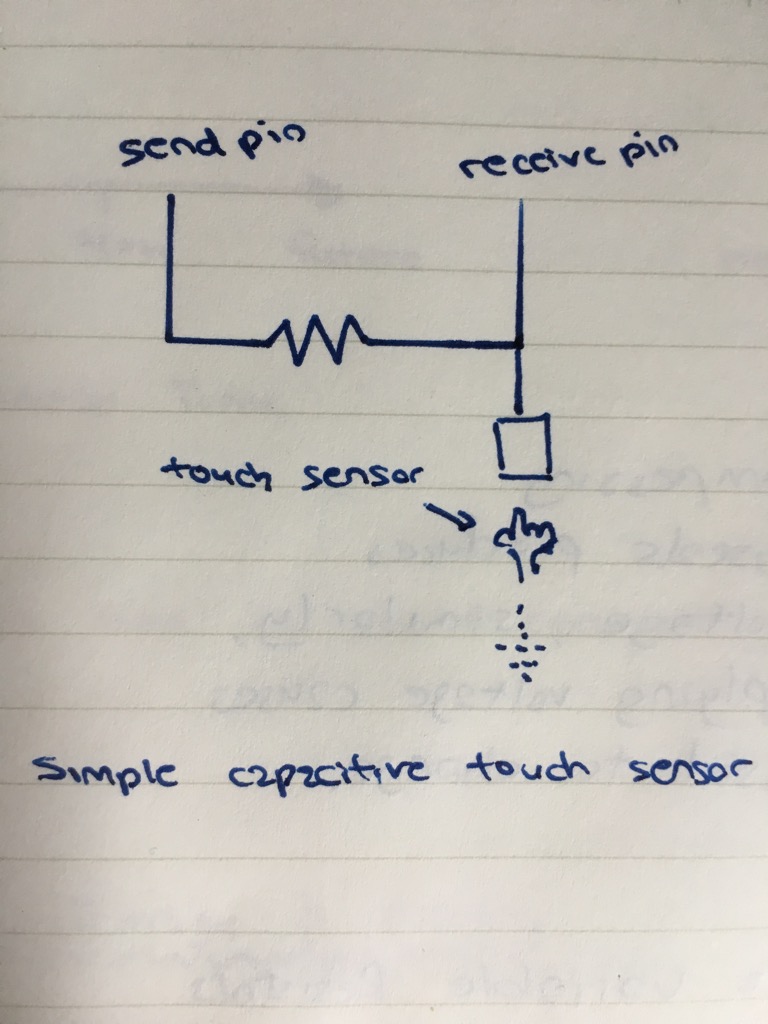
Capacitive touch sensor circuit diagram
By pulsing the send pin from high to low rapidly, and timing the delay on the
receive pin, we can detect whether there is human capacitance between the
resistor and receive pin. The physics of it is beyond me, but it’s really moving
to think that capacitative touch, instead of being a technology that is the sole
domain of screens, can be used to transform wood and paper into capacitative
touch sensors.
Software has seen a learning revolution, with online tutorials, schools, and
bootcamps promising to teach everyone how to code. Maybe electronics will
experience that same revolution.
It is no stretch to say that I learnt most of what I know of programming working
at a software consulting company. That is unfortunate because I graduated with a
Computer Science degree. I have always thought that my program at Boston
University had a particularly theoretical bent, but I have heard that sentiment
being echoed many times by other CS graduates.
Nick Montfort is the kind of teacher I wish I had as a CS undergrad, whose
approach to programming wasn’t to dive into data structures, polymorphism or
asymptotic notations, but to slowly introduce core concepts while dancing around
a simple goal - to make a small poem using a small program. I saw how friends in
the class reacted to this approach, lost in the brevity of python, but having a
decent starting point for making modifications to see changes. As Bret Victor
put it - “People understand what they can see”.
# 280-character assignment from Nick Montfort# Author: Ying Quan Tanfromreimportsearchassdefgerunding(w):ifs('[frut]$',w):w+=w[-1]elifs('[aie]$',w):w=w[0:-1]returnw+"ing"
We made small programs that allowed us to explore language
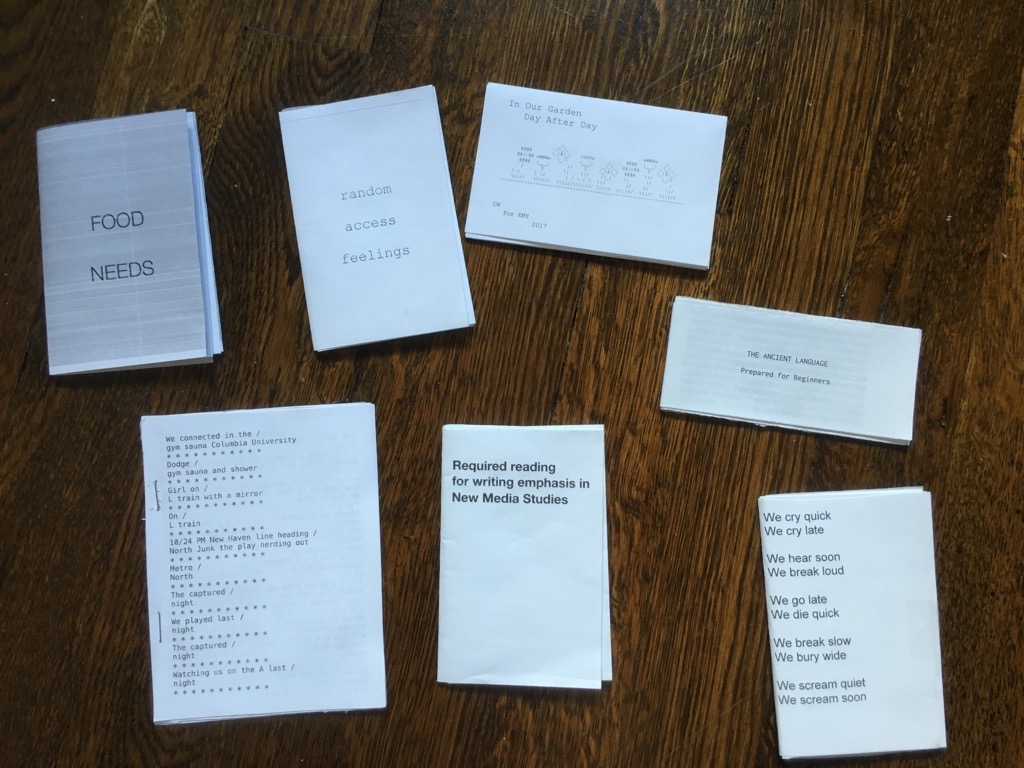
through computation and automation, and eventually this turned into zines that
we studied together.
Code poems
Nick helped us to see programs not only for its output but its materiality -
from the choices made in code to the way it is printed and bounded. This, along
with the context of a time that a work is being made, informs our
interpretations of a work. Sometimes, rather than telling, they simply observe
and record.
I will followup on the project I ended up making in another post.
Processing Community Day
23 October 2017
<img src="/crunchypartoftheegg/assets/images/processing-day-sfpc.png"" alt="Processing Community Day">
Processing Community Day. Photo Credit: SFPC
Not every open source project gets a day like the Processing community did on
October 21st 2017. Practioneers, artists, and contributing members of Processing
met up to share stories, ideas, and discuss the future of Processing. A group of
us from SFPC went up as volunteers to check it out.
The founding stories of Processing were moving - We saw images of Golan Levin
working along with Ben Fry in the dark corners of the Media Lab. It is a
reminder that the cutting edge is always less glorious than it looks in
retrospect, and we should not expect to achieve anything great if there isn’t
some stumbling and searching involved. We also got to hear about how my friends
Guillhermo Montecinos(also in SFPC) and Aron are using Processing as a teaching
tool for their school in Chile.
<img src="/crunchypartoftheegg/%7B%7B" | relative_url }}"
alt="Prof. Hiroshii Ishii at the MIT Media Lab">
Prof. Hiroshii Ishii at the MIT Media Lab
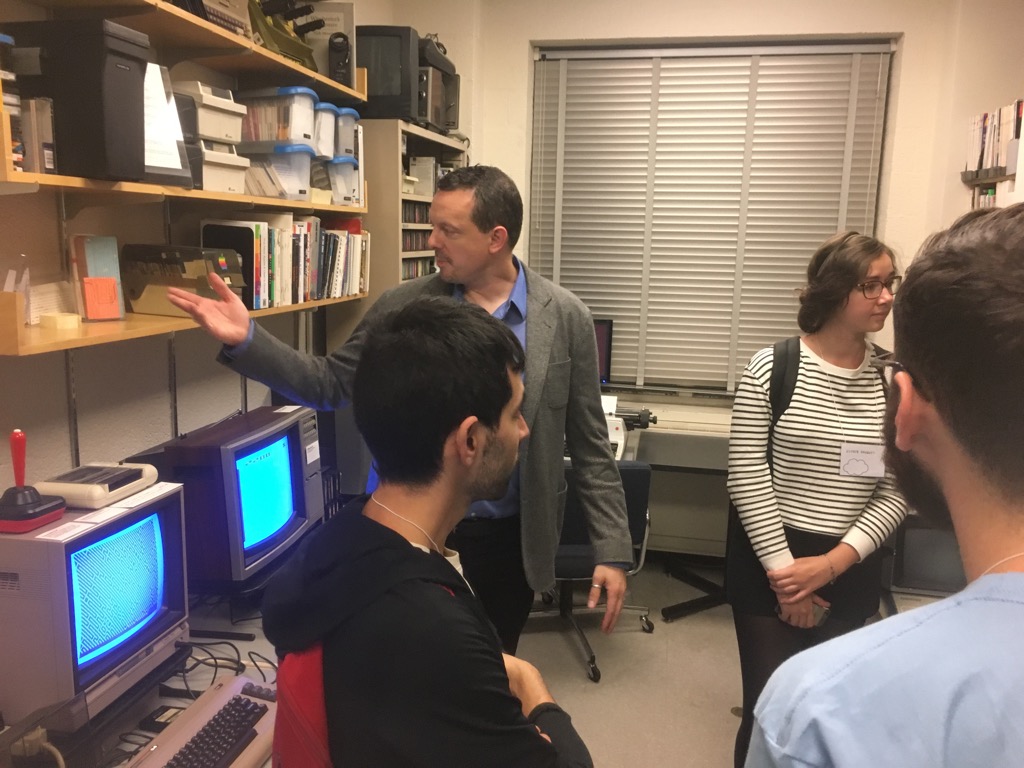
We also got the chance to meet Professor Ishii at his lab, Tangible Media
Group, and explored the new kinds of interfaces they were building. Prof.
Ishii said that we were here to celebrate Processing, a program whose goal
was to explore the limits and possibilities of putting pixels on screens. What
his lab was doing was trying to push these pixels out of the screen into the
physical world. It was a poetic way to phrase the intention of the group, paying
homage to the lineage that came before it.
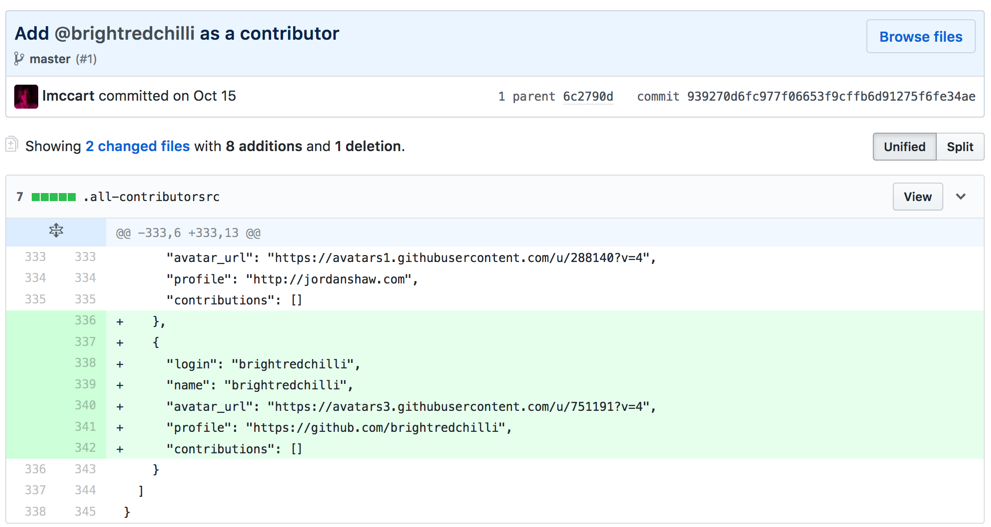
A couple of days after the event I saw this in my inbox:
I was added to the contributors list for p5.js
I had met Lauren at the event and told her about how I had worked on the first
PVector implementation of p5.js. Now, 4 years later, I’m in the contributors
list. Perhaps it is this dedication to acknowledgement that is a little open
secret for building community - contributors need to feel included and part of
the larger vision. I certainly felt proud and humbled to feel like I’m part of
this great community.
On Golan's talks
16 October 2017
We are so incredibly lucky to have so many amazing teachers in this SFPC
cohort, from Sam Lavigne to Morehshin Allahyari. One of my big influences, Golan Levin, who is our artist in residence, gave a couple of lectures
on computing, history, math, and art. It was incredible to have a
multidisplinary artist like him come and be able to see the art in computational
and mathematical concepts like Braitenburg Vehicles to easing
functions.
Casey Reas's Tissue Project
One of the artists we spent some time on is Bridget Riley, which is interesting
because her work does not involve computation in the traditional sense. He spoke
of the beauty in “interaction without computation”, and I got the sense that as
much as he loves talking about algorithms and computation, at the end of the day
it is a means of establishing a human connection.
The last gift I will pass on from Golan was a reference to this paper called
“First Word Art / Last Word Art” by Michael Naimark. In
it, Naimark draws a line between two kinds of art:
First word art is groundbreaking and exploratory. It’s playing outside any
rule structures. It side-steps competition. People often don’t know how to
react to it. Last word art is virtuosity after the rules have been fixed. It
accepts the established form, and is judged by comparison.
If I would be so bold as to build on this, I’d say that some works might be
considered first word in some circles and practices, but considered last word in
others. Along with Zach, Golan really emphasizes history and understanding
one’s place in it. It made me think more about how my work lies on the spectrum between art,
engineering, and design.
On recreating the past
09 October 2017
In the past Zach had mentioned that we were trying to bring artists into the
room when we did our sketches. Today he said it slightly differently, that we
also need to think about what works meant during that time.
In the past Zach had mentioned that we were trying to bring artists into the
room when we did our sketches, but today he said it in another really beautiful
way. We are trying to understand what certain works meant at their time, to
understand it from history’s perspectives.
WHen Muriel Cooper founded the Visual Language Workshop at MIT, she was the
first to tackle the ‘information deluge’ of her time. The name of the group was
literally visual language - learning how to see language, not as simply glyphs
bearing information, but as having texture themselves. They had
these theories for how to deal with information onslaught - using what she
called transparency, adaptability and blur.
Transparency - You can see right through the data, as if it was printed on
glass, to sequential layers behind;
Adaptability - that if there is a change in background color in a dynamic
environment, the type “knows” to adjust its own hue so as to remain legible
against it; and
Blur - that fuzzy fields of information come into focus, and therefore become
readable, as you approach them.
It’s interesting to see which approaches have ‘succeeded’, and whose influence
we see today, and which ones seem antiquated. To me, blur would seem tacky now,
but the idea remains that since we can’t parse too much text on screen at any
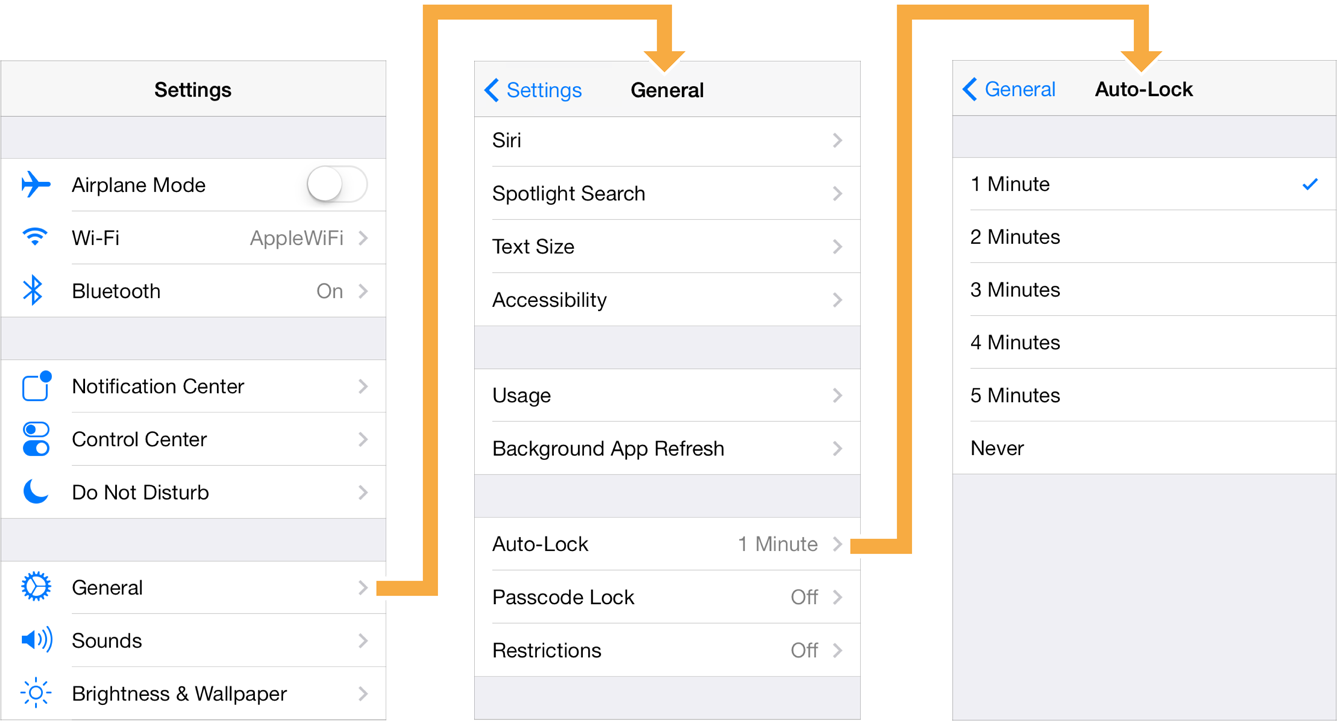
one time, we hide information, by moving them off the screen, as shown with this
example of navigation on mobile phones:
Others, like transparency, though having some appropriate use cases, seems to have lost it’s relevancy.
The point is that, to understand why some of these approaches were considered,
we have to look at the time in which they were conceived. More powerful
computers were being developed for 3D animation at the time, and MIT Media Lab, with it’s
corporate sponsorship model had access to the latest and most powerful machines
of the time, capable of rendering and transforming text in a new way.
Zach, and really all of the SFPC experience has given me a great appreciation
for our need to study the past to understand how to move forward with
technology.